
Home
About Us
Company Profile
Qualifications and Honors
Corporate Culture
Production equipment
R&P Equipment
Four Column Vulcanizing Press
Frame Vulcanizing Press
E-type Vulcanizing Press
EVA Foam Molding Machine
Secondary Foaming Machine
Open Mixing Machine
Old-fashioned Flat Vulcanizing Machine
Machining services
Industrial components
Blog
Company News
Industry News
Jobs
Contact
Contact Information
Online message
Human Resources
My company was awarded the title of "Specialized, Refined, and Unique" Small and Medium-sized Enterprise in Jiangsu Province for 2024.
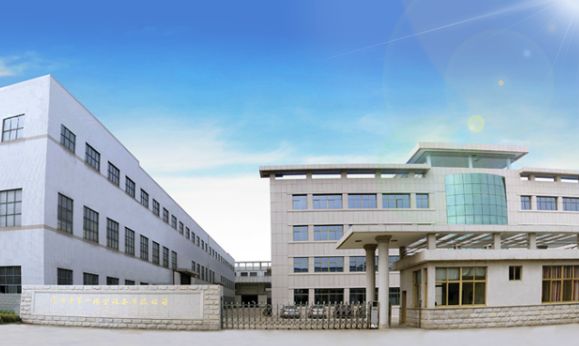
Recently, Changzhou First Rubber and Plastics Equipment Co., Ltd. was awarded the title of "Specialized, Refined, and Unique" Small and Medium-sized Enterprise in Jiangsu Province for 2024. This honor is a high recognition of the company's professional level, innovation ability, and unique advantages. The company has always adhered to the attitude of striving for excellence, focusing on a specific field, and continuously breaking through innovation. This award will encourage the company to continue moving forward, continuously improving its core competitiveness, contributing more to the industry's development, and opening a new chapter of glory.
04
2024
/
06
Instructions for controlling the temperature of a flat vulcanizer
Instructions for Temperature Control of a Flat Vulcanizing Press 1. Temperature control of the flat vulcanizing press is achieved by an intelligent controller that monitors the temperature of the upper, middle, and lower heating plates during the vulcanization process. The heating plate temperature readings and setpoint values are displayed on the control panel. 2. During the heating-up process, a red light will illuminate. Once the operating temperature is reached, the indicator light will turn green. If the mold temperature deviates from the setpoint during the vulcanization process, an audible and visual alarm will activate, and the machine will automatically depressurize. 3. During operation, the mold temperature and machine temperature are controlled using a dual closed-loop system, ensuring that the mold temperature remains consistently high.
07
2019
12
Six points to note on the maintenance of vulcanizing machines
As a conveyor belt jointing tool, the vulcanizing machine, like other tools, requires maintenance and care during and after use to extend its service life. Currently, the vulcanizing machines produced by our company, with proper use and maintenance, have a service life of 8 years. The following points should be noted when maintaining and caring for the vulcanizing machine: 1. The storage environment of the vulcanizing machine should be kept dry and well-ventilated to prevent moisture from affecting the electrical circuits; 2. Do not use the vulcanizing machine outdoors in rainy weather to prevent water from entering the control box and heating plate; 3. If the working environment is humid and watery, when disassembling and moving the vulcanizing machine, items should be used to raise it off the ground to prevent the vulcanizing machine from getting wet.
Safe operating procedures for a flat vulcanizer
Safety operating procedures for plate vulcanizing machine 1. Wear protective equipment during operation and do not use wet gloves. 2. Preheat the plate before vulcanization, check for debris between the plate layers, and check if other parts are normal. 3. Keep the pressure gauge and thermometer sensitive and effective, and strictly control the steam pressure, oil pressure, and vulcanization temperature according to safety and process conditions. 4. When loading the vulcanization mold, do not put your hands into the plate to prevent burns and squeezing injuries. Stop the machine and deal with any problems found. The molds used should be placed steadily to prevent falling and injury. 5. After operation, cut off the power, close the water and gas valves, and return the molds to their designated locations.
28
11
Solutions for wear and tear on the crossbeam shaft head of a vulcanizing machine
Due to the metallic material and high hardness of the vulcanizing machine, vibration, impact, and other combined forces during operation cause gaps and wear in the components. Traditional repair methods include welding, thermal spraying, and electroplating, but these methods have certain drawbacks: welding can cause the surface of the parts to reach a very high temperature, resulting in deformation or cracking, affecting dimensional accuracy and normal use, and even causing breakage in severe cases; electroplating, while having no heat effect, cannot have a layer that is too thick, has serious pollution, and its application is greatly limited. Currently, Western countries mostly use high-polymer composite materials to address these issues, with the most mature technology being the Megahertz technology system. Its comprehensive performance and machinability at any time can meet the requirements of post-repair use and precision, reduce the impact and vibration experienced by the equipment during operation, and extend its service life. Because the material is a "variable" relationship, when external force impacts the material, the material will deform and absorb the external force, and expand and contract with the bearing or other components, maintaining a tight fit with the components and reducing the probability of wear. For large vulcanizing machines, "molds" or "matching components" can also be used to repair damaged equipment on-site, avoiding the overall disassembly of the equipment and maximizing the matching dimensions of the components to meet the production and operation requirements of the equipment.
20
Welding structural parts shipment
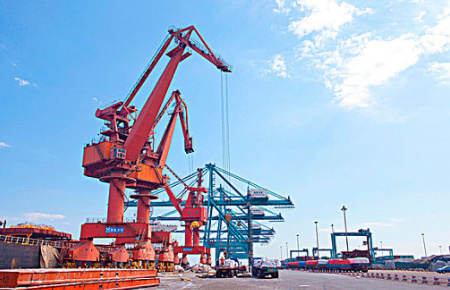
Recently, our company's welded structural parts product, roller crusher, was loaded and shipped to Shanghai Port. Our company specializes in manufacturing large industrial structural parts, involving processes such as blanking, riveting and welding, machining, sandblasting and painting, and assembly. We provide customers with professional overall solutions for structural parts products.
14
2017
08